Home Care · Buyer's Guide
Drop-In Toilet Cleaners in 2026: How They Work, What to Look For, and Where FizzClean Fits In
Published June 12, 2026 · 7 minute read · By Home Care Editorial
The drop-in foam category has quietly become one of the busier shelves in household cleaning. The pitch — a single scoop that fizzes, cleans the rim, and rinses on the next flush — is appealing enough that a dozen brands now compete for it. This guide explains how these products actually work, what to look for on the label, the trade-offs nobody puts in their ad copy, and where one of the better-known formulas, FizzClean, fits into that landscape.
What drop-in foam cleaners actually do
A drop-in foam cleaner is built around two things: a surfactant system that lifts soil from porcelain, and an effervescent reaction that puts that surfactant where a brush can't easily reach. The powder hits the water in the bowl, an acid (usually a mild organic acid such as citric or sulfamic) meets a carbonate, and the resulting carbon dioxide drives a thick foam that climbs the bowl walls.
That climb is the whole point. The underside of the rim, where water jets exit, is the most consistently soiled part of any toilet and the hardest to scrub. A foam that fills the bowl from below has a few minutes of contact time with that surface before the next flush washes it away, and that contact time is what removes the routine film responsible for odor and dullness.
What these products are not designed to do is rebuild a neglected bowl. Heavy mineral scale, rust ring from iron-rich water, and long-set staining are chemistry problems that need a dedicated acid descaler or mechanical abrasion. Treat foam cleaners as the maintenance step that keeps you from ever needing the descaler — not as a one-shot rescue.
What to look for when buying one
- Septic-safe labeling. If you're on a septic system, only buy products that explicitly state septic compatibility. Avoid anything listing sodium hypochlorite (bleach) or quaternary ammonium compounds in the active ingredients.
- Single-dose packaging. Pre-measured pouches or scoops are easier to store and harder to over-apply than bulk powders. Over-application doesn't clean better and noticeably shortens how long a bag lasts.
- Fragrance load. Strong synthetic fragrance is the most common reason buyers stop using these products mid-pack. If you're sensitive, look for "fragrance-free" or "lightly scented" formulations.
- Cost per use, not per pack. A 30-count pouch at $25 ($0.83/use) is meaningfully different from a 60-count at $35 ($0.58/use). Multi-pack bundles are almost always cheaper per use; the cap is shelf space and shelf life.
- Return policy. Direct-to-consumer brands typically offer 30-day satisfaction guarantees. The terms (opened packs accepted? customer pays return shipping?) vary widely. Read them before the second purchase, not the first.
The honest case for and against
Where they help
- · No brush contact required for routine cleaning
- · Foam reaches under-the-rim jets a brush misses
- · Easier on hands, wrists, and backs than scrubbing
- · Compact storage compared with bottles + gel + brush
Worth knowing
- · Not a substitute for occasional deep cleaning
- · Ongoing cost — like any consumable
- · Fragrance can be polarizing
- · Won't remove heavy mineral scale or rust
How we approached this guide
We didn't run a controlled lab test for this piece. What we did was read manufacturer ingredient disclosures, compare claimed dosing and pack economics, check U.S. retail availability, and verify the return-policy language each brand publishes. Where a claim couldn't be substantiated from the brand's own documentation or a third-party certification, we left it out. Results from any cleaning product depend on water hardness, bowl condition, and use frequency — your experience may differ from any brand's marketing.
Drop-in foam vs. the alternatives
| Criteria | Drop-in foam | Tank tablet | Brush + gel |
|---|---|---|---|
| Effort per use | Pour, wait, flush | Set and forget | Manual scrub |
| Under-rim reach | Foam climbs to it | Limited | Brush bristles miss spots |
| Septic compatibility | Usually yes (read label) | Varies; many are bleach-based | Depends on gel formula |
| Ongoing cost | Per-use cost, predictable | Per-month cost | Lowest per use |
| Scent profile | Mild to moderate | Often heavy | Varies |
| Storage footprint | Compact pouches | Compact tablets | Bulky bottle + brush |
Where FizzClean fits in
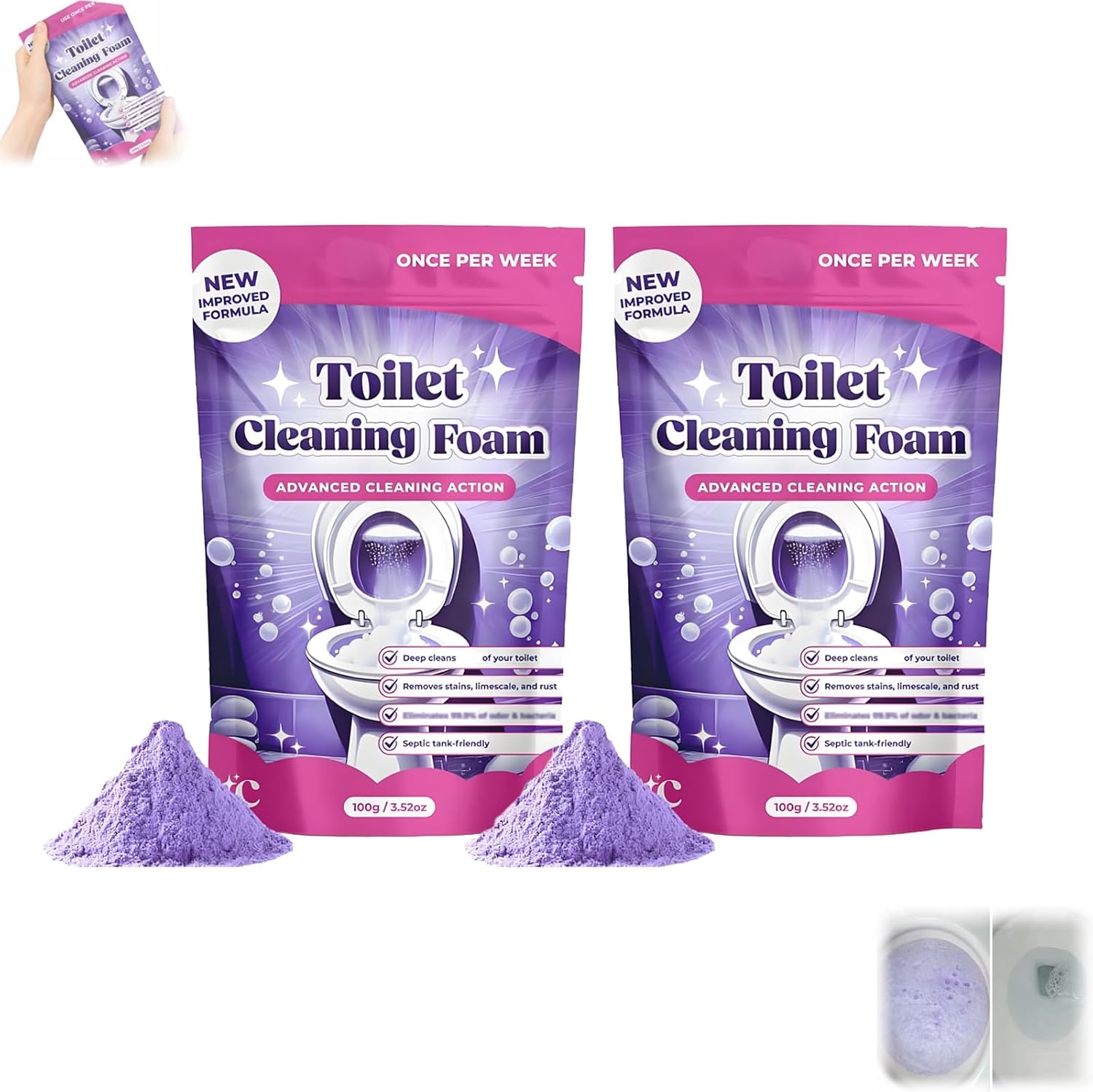
FizzClean is a powder-based, single-scoop drop-in cleaner sold direct-to-consumer in the U.S. The information below reflects what the manufacturer publishes on its product page; we have not independently verified each claim.
- Format: single-dose pouches (one scoop per use).
- Recommended frequency: roughly once a week for routine maintenance, per the brand.
- Claimed compatibility: the brand states the formula is designed to be septic-safe and tank-friendly. Verify with the back-of-pack label before use on a septic system.
- Where it's sold: the brand's official store ships from U.S. warehouses; multi-pack bundles are the lower-cost-per-use option.
- Return policy: a satisfaction guarantee is offered through the official store; current terms and any promotional pricing are shown at checkout.
Check current price on the official store →
Affiliate link — see disclosure above.
Frequently asked questions
Are drop-in foam cleaners safe for septic systems?
Most modern drop-in foam cleaners are formulated without chlorine bleach and are labeled septic-safe. The active ingredients (typically anionic and non-ionic surfactants plus a mild acid or carbonate for the fizz) break down in the tank without disrupting the bacterial colony, provided you use the recommended dose. Always read the back-of-pack ingredients before pouring anything into a system with a septic field — products that contain sodium hypochlorite or quaternary ammonium compounds are the ones to avoid.
How often should you use a drop-in cleaner?
For routine maintenance in a typical household, once a week is enough to keep the bowl looking even and reduce odor build-up. Hard-water homes and high-traffic bathrooms may benefit from a second weekly application. Daily use is generally unnecessary and accelerates the ongoing cost without proportional benefit.
Will a drop-in cleaner remove heavy mineral scale or rust?
No. Foam cleaners are designed for routine soil, light staining, and odor control. Heavy calcium scale, rust rings from iron in the water supply, or long-neglected build-up usually need a dedicated acid-based descaler (with proper ventilation and gloves) or pumice stone abrasion. Treat foam cleaners as maintenance, not restoration.
How long does shipping typically take in the U.S.?
Manufacturers selling direct-to-consumer usually quote 3–7 business days for ground shipping within the continental U.S., with order processing within 24 hours on weekdays. Multi-pack bundles often ship together from a single warehouse; check the brand's shipping page for exact transit times to your ZIP code.
Is there a money-back guarantee?
Most direct-to-consumer cleaning brands offer a satisfaction guarantee in the 30-to-60-day range, with the customer covering return shipping in many cases. Terms vary by seller and are governed by the brand's return policy at checkout — read the fine print before assuming a guarantee applies to opened or partially used packs.
The bottom line
Drop-in foam cleaners are a category that makes sense for a specific job: routine maintenance of an otherwise healthy toilet, with less physical effort than scrubbing. They don't replace deep cleaning, they add a small recurring cost, and the right one for your house depends on water hardness, septic status, and fragrance tolerance. Read the label, do the per-use math, and start with the smallest pack the brand sells before committing to a bundle.
If you've decided a drop-in foam fits your routine and you want to try the FizzClean formula specifically, the official store has the current pricing and bundle options:
References and further reading